


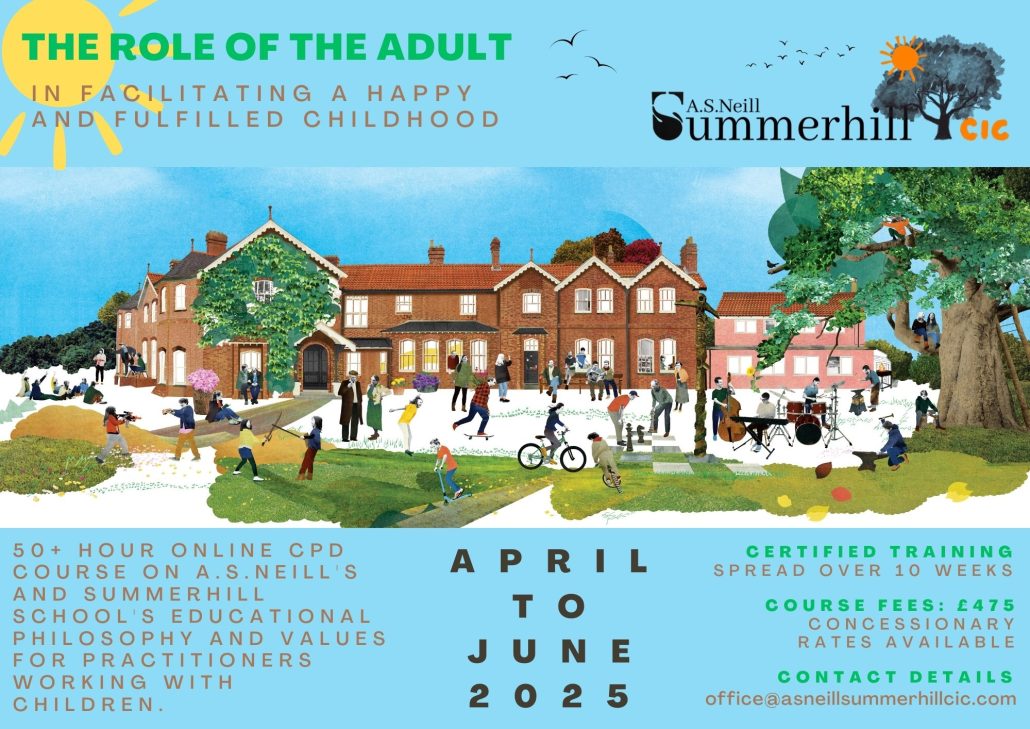
In an era where educational reform dominates the global discourse, the principles established by A.S. Neill at Summerhill School continue to challenge conventional wisdom about the role of adults in children’s education. This groundbreaking approach, now accessible through specialized online courses, offers educators and parents a transformative perspective on how adults can better serve children’s developmental needs.
The Revolutionary Origins
Alexander Sutherland Neill founded Summerhill School in 1921, establishing what would become one of the most radical experiments in educational history. His vision wasn’t simply about creating another alternative school; it was about fundamentally reconsidering the relationship between adults and children in the educational process.
Neill’s philosophy emerged from a deep dissatisfaction with traditional educational methods that he believed prioritized conformity over personal growth. Having witnessed the psychological damage inflicted by authoritarian education systems, he developed an approach centred on emotional well-being and self-determination.
The Philosophical Foundation
At the heart of Neill’s philosophy lies a profound respect for the child’s autonomy. He believed that adults in educational settings should serve not as authoritarian figures, but as facilitators of children’s natural development. This revolutionary perspective is built on several key principles:
Self-Regulation and Freedom
Neill argued that children are innately drawn toward healthy development when given the freedom to pursue their interests. The adult’s role, therefore, isn’t to direct or control but to create an environment where this natural development can flourish.
Emotional Priority
Unlike traditional education systems that prioritize academic achievement, Neill’s approach places emotional well-being at the forefront. Adults in this framework must understand that addressing emotional needs is a prerequisite to meaningful learning.
Democratic Participation
Perhaps most revolutionary was Neill’s insistence on democratic decision-making within the school environment. Adults and children participate as equals in community meetings, demonstrating practical democracy in action.
The Modern Implementation
Today’s interpretation of Neill’s philosophy, particularly regarding the adult’s role, has evolved to meet contemporary challenges while maintaining its core principles. The modern approach emphasizes:
Creating Safe Spaces
Adults must develop environments where children feel emotionally and physically secure enough to explore their interests and express their authentic selves.
Active Listening
Rather than directing or lecturing, adults are encouraged to truly listen to children, understanding their perspectives and needs without judgment or immediate intervention.
Supporting Self-Direction
The adult’s role involves being available as a resource while respecting children’s autonomy in their learning journey. This requires tremendous trust in the child’s natural development process.
Practical Applications
The implementation of Neill’s philosophy in modern educational settings requires specific skills and understanding from adults:
Observation Skills
Adults must develop keen observation skills to understand children’s needs without interfering unnecessarily in their natural development process.
Emotional Intelligence
Working within Neill’s framework demands high emotional intelligence from adults, who must manage their own reactions while supporting children’s emotional growth.
Democratic Leadership
Adults need to learn how to facilitate democratic processes while maintaining appropriate boundaries and ensuring community safety.
Challenges and Considerations
Implementing Neill’s philosophy in modern educational contexts presents several challenges:
Cultural Resistance
Many educational systems remain deeply rooted in traditional hierarchical structures, making it difficult to implement truly democratic practices.
Adult Preparation
Adults often need significant support and training to transition from traditional authoritarian roles to Neill’s facilitative approach.
Balance of Freedom
Finding the right balance between freedom and responsibility requires constant reflection and adjustment.
The Impact on Modern Education
Neill’s ideas about the adult’s role in education continue to influence progressive education movements worldwide. His emphasis on emotional well-being and democratic participation has become increasingly relevant in addressing modern educational challenges:
Mental Health Awareness
As society increasingly recognizes the importance of mental health, Neill’s focus on emotional well-being seems prescient.
Democratic Values
In an era of growing concern about democratic institutions, Neill’s practical approach to democratic education offers valuable insights.
Individual Agency
The modern emphasis on personalized learning aligns with Neill’s belief in supporting individual development paths.
Looking Forward
The future of education may well depend on our ability to reimagine the role of adults in children’s learning journeys. Neill’s philosophy offers a tested framework for this transformation, challenging us to create more democratic, emotionally aware educational environments.
The principles established at Summerhill continue to evolve through modern interpretations and applications, offering hope for educational reform that truly serves children’s needs while respecting their fundamental rights and autonomy.
Final Thought:
A.S. Neill’s vision for the role of adults in education remains revolutionary even today. As we face increasing challenges in education globally, his insights about emotional well-being, democracy, and self-directed learning become ever more relevant. The continued study and implementation of his philosophy through modern courses and programs offer vital tools for creating more humane and effective educational environments.
No responses yet